Designing a travel experience from scratch
Rioko was a Da Vinci assignment focused on creating a travel agency’s user experience from scratch. A new concept provided room to consider how a person approaches travel search and what information they use to choose.
The proposal explores several entry points. Destination is one of them, alongside budget, available time and the type of experience as criteria for beginning to explore options.
I worked on the proposal on my own, using Figma, Illustrator and Photoshop during coursework, approximately in 2023.
A trip can begin with different preferences
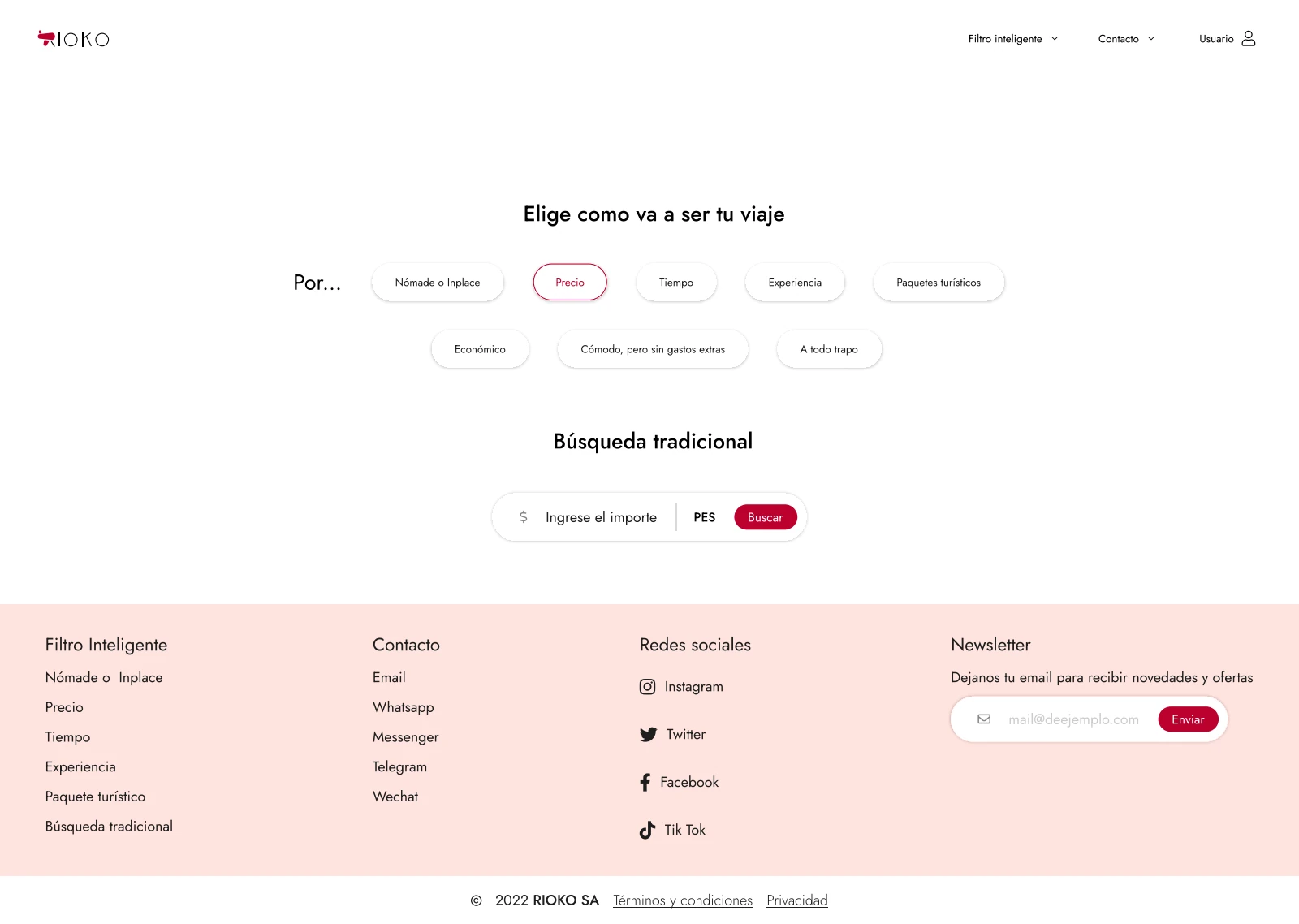
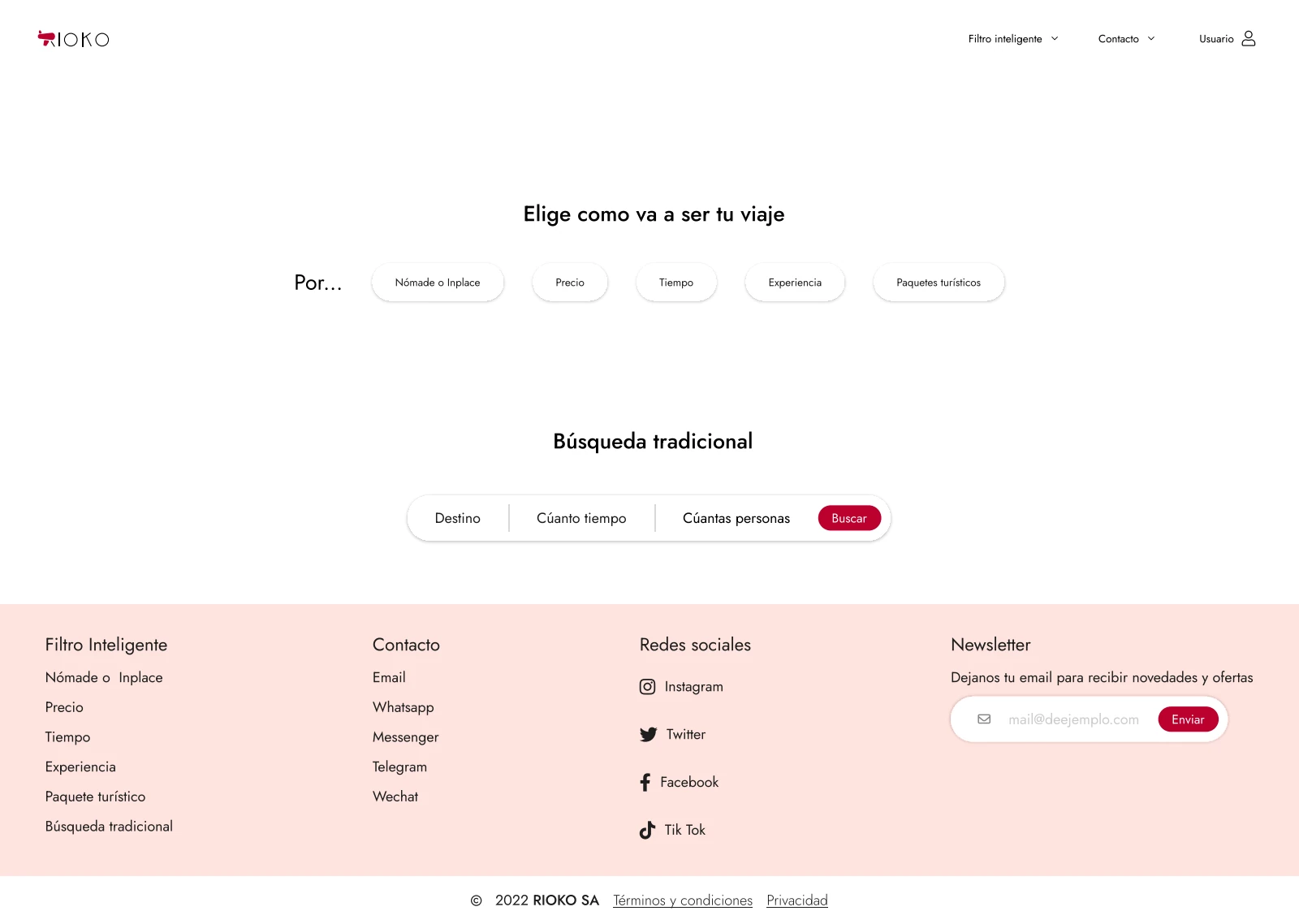
The prototype offers search by destination, duration and number of people, alongside routes based on budget, time or experience. Each entry point organizes the same intention—finding a trip—around a different preference.
The structure accommodates both someone with a destination in mind and someone starting from a condition they need to meet. The screens show how this choice is presented within an academic navigation proposal.
From budget to results
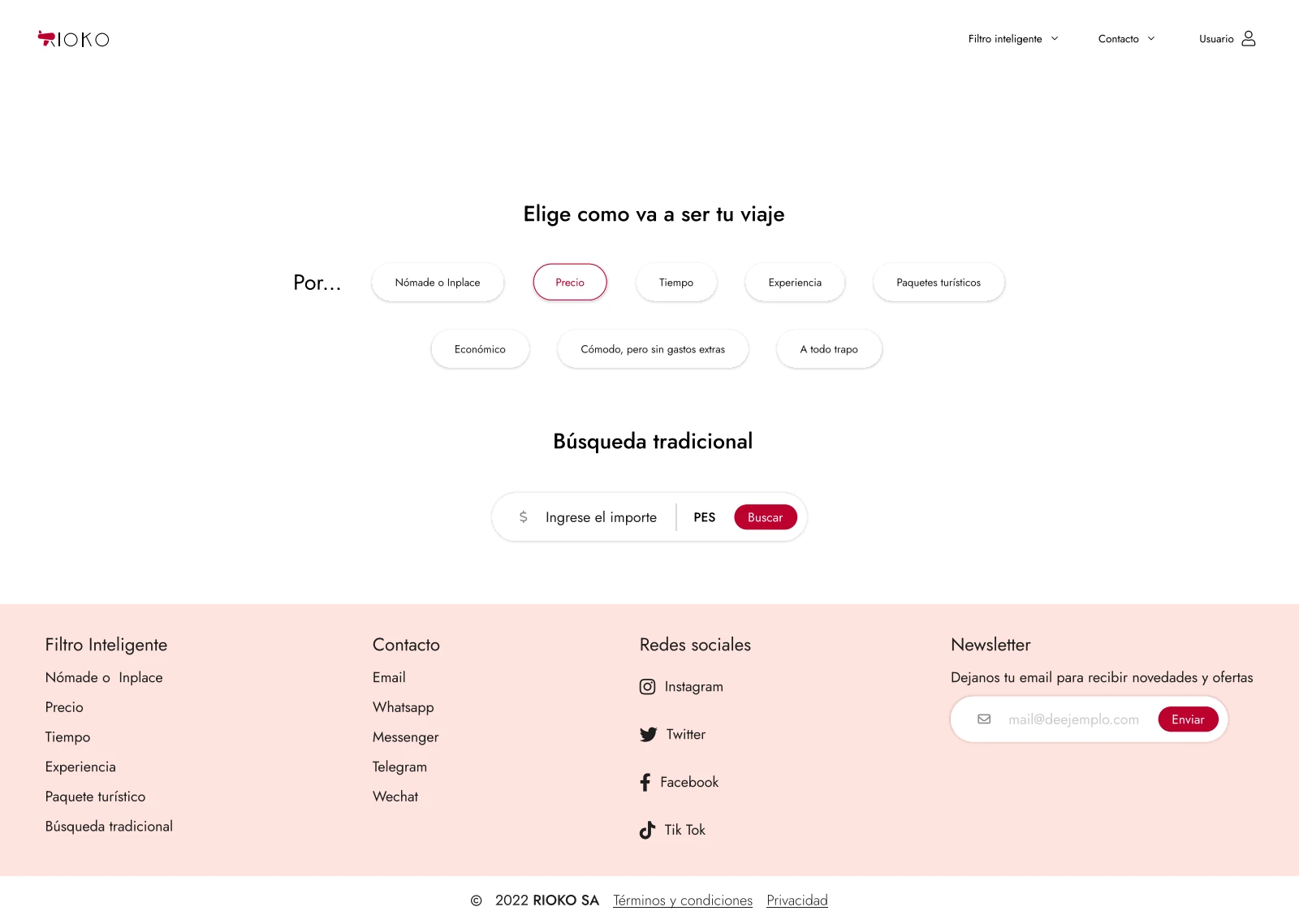
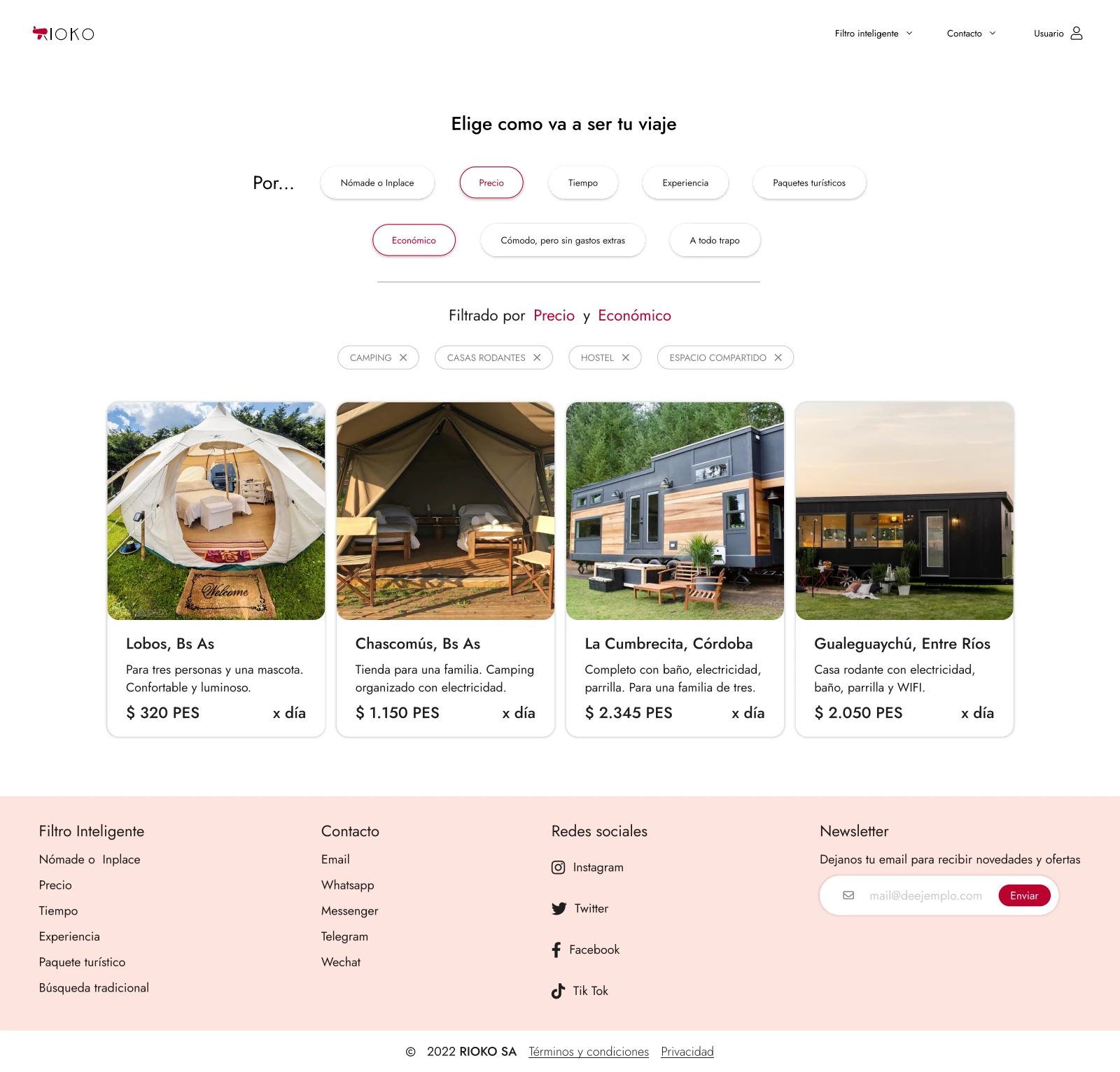
The documentation shows a price-based flow: entering an amount or selecting a budget category, then reviewing results with different accommodation options. Camping, camper vans, hostels and shared-space filters appear in that material.
These examples connect an initial preference to the options shown by the interface. Prices and destinations inside the prototype are academic sample content, not current offers.
Navigation, budget and results
Maintaining continuity through the search journey
Header, footer and contextual navigation proposals accompany the search and results screens. Within the prototype, they connect the different stages and maintain a recognizable organization.
The selected material traces a concrete sequence: choose a starting point, express a preference and review alternatives. That journey is the focus of the UX work shown in this assignment.